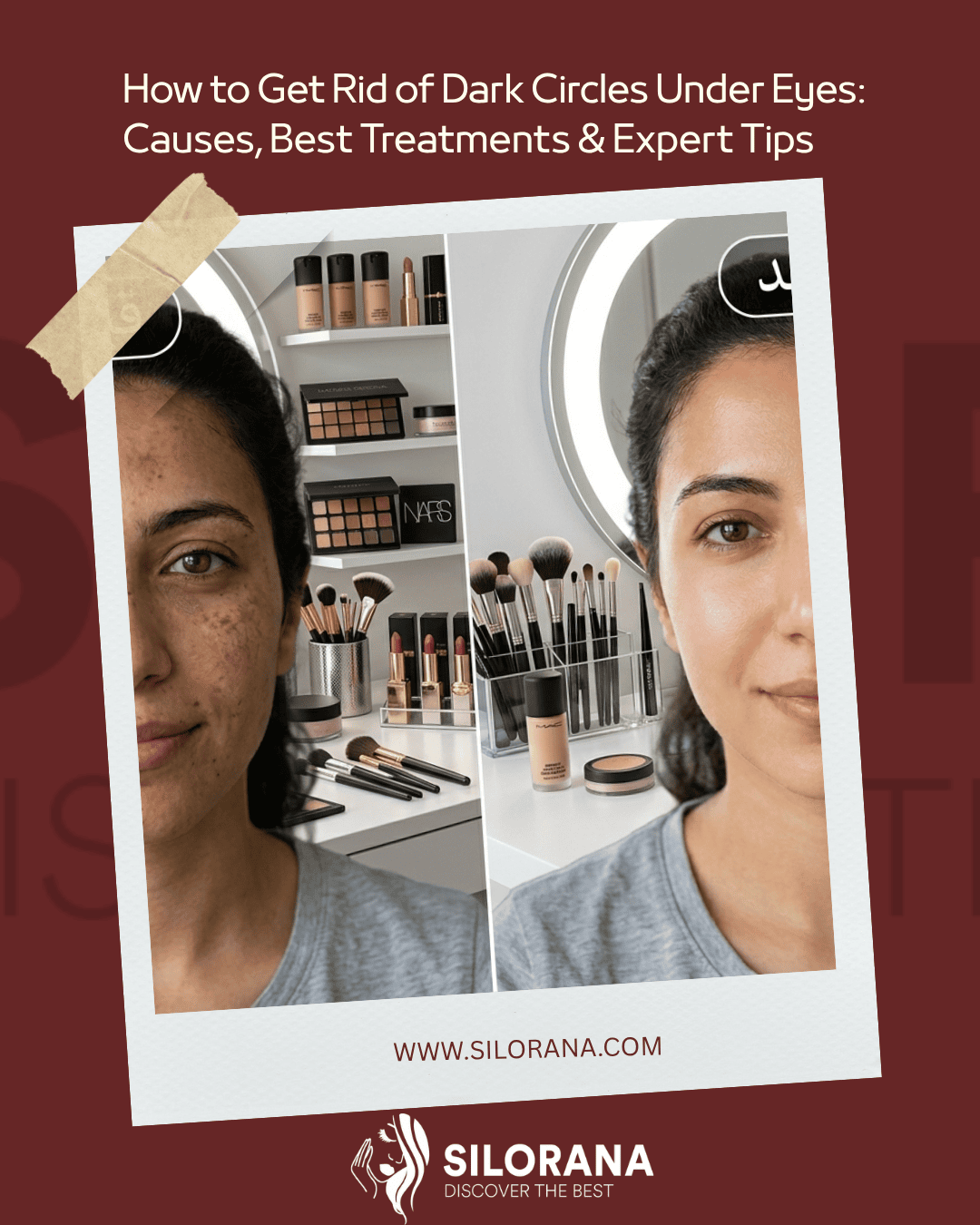
You finally got rid of that breakout — only for it to leave behind a stubborn dark mark that seems to last forever. Or maybe you’ve noticed flat brown patches appearing on your cheeks after years of sun exposure, or patches of uneven skin tone that no amount of brightening moisturizer seems to touch.
In This Article
ToggleHow to Get Rid of Dark Circles Under Eyes: Causes, Best Treatments & Expert Tips
Dark spots on the face are one of the most common and most frustrating skin concerns in the world. They affect virtually every skin tone, every age group, and every skin type. And yet, most people spend years using the wrong products — because they don’t know what type of dark spot they’re dealing with.
At Silorana, we’ve gone deep into the dermatological research and ingredient science to bring you the most complete guide available. By the end of this article, you’ll know exactly what’s causing your dark spots, which ingredients will actually fade them, and how to build a routine that prevents them from coming back.
Don’t forget to share these tips with your friends to always have stable and bright makeup, and hair. If you need more details or want additional advice, do not hesitate to visit our website frequently.
What Are Dark Spots on the Face?
Dark spots — medically known as hyperpigmentation — are areas of skin that produce more melanin than the surrounding tissue. Melanin is the pigment responsible for the color of your skin, hair, and eyes. When certain triggers cause skin cells called melanocytes to overproduce melanin, the result is patches or spots that appear darker than your natural skin tone.
These spots are almost always harmless. They don’t hurt, they don’t spread like infections, and they carry no medical risk in most cases. But they can significantly affect your confidence and the appearance of your complexion — which is why millions of people search for ways to fade them every single day.
The key insight that most skincare guides miss: not all dark spots are the same type, and different types need different treatments. Using the right approach for the wrong type of spot is one of the main reasons people feel like “nothing works.”
The 5 Types of Dark Spots on the Face
Type 1: Post-Inflammatory Hyperpigmentation (PIH) — The Most Common
What it looks like: Flat dark marks left behind after a pimple, scratch, rash, eczema flare, or any kind of skin inflammation has healed. The skin surface is completely smooth — this is not a scar. The color can range from pink or red (in lighter skin tones) to brown or very dark brown (in medium and deeper skin tones).
Who gets it most: PIH is particularly common in medium to deep skin tones because skin with more melanin responds to inflammation more aggressively. However, it affects all skin types.
Why it happens: When your skin experiences inflammation, it goes into repair mode. As part of that process, it often overproduces melanin in the affected area. That excess melanin is what causes the lasting dark mark after the wound or breakout heals.
Good news: PIH will gradually fade on its own — but it can take anywhere from 3 months to 2 years without treatment. With the right ingredients, you can dramatically accelerate that timeline.
Best treatments: Vitamin C, Niacinamide, Alpha Arbutin, Azelaic Acid, Retinol, chemical exfoliants (AHA/BHA)
Type 2: Sun Spots (Solar Lentigines / Age Spots)
What it looks like: Flat, well-defined brown or gray-brown spots, usually round or oval in shape. They appear on the most sun-exposed areas of your face — forehead, nose, cheeks, upper lip area. Unlike PIH, they have sharp, clear borders and don’t fade without treatment.
Who gets it most: More common after age 30, and in people with lighter skin tones who have had significant cumulative sun exposure. However, no skin tone is immune.
Why it happens: UV radiation from the sun triggers melanin production as a protective response. Years of cumulative sun exposure cause patches of the skin to produce permanently elevated levels of melanin in specific spots.
Important note: Sun spots are very stable — they won’t fade on their own, ever. But they respond very well to consistent topical treatment and professional procedures.
Best treatments: Vitamin C, Hydroquinone, Kojic Acid, chemical peels, laser therapy, IPL (Intense Pulsed Light)
Type 3: Melasma
What it looks like: Larger, blotchy patches of hyperpigmentation that appear symmetrically on the face — typically across the cheeks, forehead, upper lip, and bridge of the nose. The patches have blurred, less defined edges compared to sun spots.
Who gets it most: Melasma is significantly more common in women (90% of cases) and is strongly associated with hormonal changes. It’s sometimes called “the mask of pregnancy” because it’s so common during pregnancy. It also frequently appears with hormonal birth control use and can worsen significantly with sun exposure.
Why it happens: Melasma is caused by a combination of hormonal triggers and UV exposure acting on overactive melanocytes. This makes it the most stubborn type of hyperpigmentation to treat — because even after successful fading, hormonal fluctuations or sun exposure can trigger a relapse.
Critical note: Standard skincare products can help manage melasma, but it often requires a combination of treatments and very strict, ongoing sun protection. Tinted sunscreens with iron oxides are especially important because they block visible light, which can worsen melasma independently of UV rays.
Best treatments: Azelaic Acid, Tranexamic Acid, Niacinamide, Hydroquinone (prescription), tinted broad-spectrum SPF 50+, dermatologist consultation for persistent cases
Type 4: Freckles (Ephelides)
What it looks like: Small, flat, light-brown spots, usually evenly distributed across sun-exposed areas like the cheeks, nose, and forehead. They typically appear in childhood or early adulthood and tend to fade in winter and darken in summer with UV exposure.
Who gets it most: Most common in people with fair skin, light hair, and a genetic predisposition — freckles are largely inherited.
Why it happens: Freckles are caused by clusters of cells with more melanin than the surrounding skin, triggered by UV exposure in genetically predisposed individuals.
Note: Unlike other types of hyperpigmentation, many people embrace freckles as part of their natural appearance. If you do want to fade them, the same brightening ingredients that treat other dark spots will work — with patient, consistent use.
Best treatments: Vitamin C, SPF (prevents darkening), Retinol, Alpha Arbutin
Type 5: Drug-Induced or Hormonal Hyperpigmentation
What it looks like: Dark patches or spots that appear after starting a new medication or hormonal treatment. Can look similar to melasma in pattern.
Why it happens: Certain medications increase the skin’s sensitivity to light or directly stimulate melanin production. Common culprits include certain antibiotics, antimalarials, chemotherapy drugs, and hormonal contraceptives. Deficiencies in B12 and folic acid can also trigger hyperpigmentation.
What helps: If suspected, consult your doctor before changing medication. SPF is essential. Nutritional deficiencies should be addressed through diet or supplementation with medical guidance.
The Skincare Ingredients That Actually Fade Dark Spots
This is the most important section of this guide. The ingredient you choose should match your type of dark spot and your skin’s sensitivity level.
Vitamin C (Ascorbic Acid and Derivatives)
Vitamin C is the gold standard brightening ingredient. It works by inhibiting the enzyme (tyrosinase) responsible for melanin production, while simultaneously providing antioxidant protection against further UV-induced pigmentation. It also stimulates collagen production, improving overall skin texture.
Best for: PIH, sun spots, freckles, general brightening When to use: Morning, applied after cleansing and before SPF Timeframe: 8–12 weeks of consistent daily use for visible results Tip: L-ascorbic acid (pure Vitamin C) is the most studied form but can be unstable and irritating. If you have sensitive skin, look for more stable derivatives like THD Ascorbate or Ascorbyl Glucoside.
Niacinamide (Vitamin B3)
Niacinamide is one of the most versatile and well-tolerated brightening ingredients available. It works by blocking the transfer of melanin to the outer skin cells, reducing the appearance of existing dark spots while preventing new ones from forming. It also strengthens the skin barrier and reduces inflammation — making it a smart choice for PIH caused by acne.
Best for: PIH, melasma (as part of a combination approach), all-over uneven skin tone When to use: Morning and/or evening Timeframe: 4–8 weeks for noticeable improvement Tip: Niacinamide is exceptionally gentle and safe for all skin types, including sensitive and acne-prone skin. It pairs beautifully with most other actives.
Alpha Arbutin
Alpha arbutin is a naturally derived, gentle melanin inhibitor. It works in a similar way to hydroquinone (blocking tyrosinase) but is significantly less irritating, making it suitable for sensitive skin types and darker skin tones that need to avoid harsh bleaching agents.
Best for: PIH, sun spots, general brightening When to use: Morning or evening Timeframe: 8–12 weeks Tip: Alpha arbutin is often combined with Vitamin C in serums for a synergistic brightening effect — look for products featuring both.
Azelaic Acid
Azelaic acid is a multi-functional acid that selectively inhibits overactive melanocytes — meaning it specifically targets the cells producing too much melanin without affecting normally pigmented skin. This makes it particularly safe for sensitive skin and darker skin tones. It also has anti-inflammatory and antibacterial properties, making it excellent for PIH caused by acne.
Best for: PIH, melasma, sensitive skin, rosacea-related discoloration Concentration: OTC products contain up to 10%; prescription formulas go up to 15–20% When to use: Morning or evening Timeframe: 8–12 weeks
Retinol and Retinoids
Retinol (over-the-counter) and prescription retinoids like tretinoin work by accelerating skin cell turnover, essentially shedding the pigmented surface cells faster and replacing them with new, evenly pigmented cells underneath. Research shows retinoids can reduce dark spots by up to 64% over 3–6 months of consistent use.
Best for: PIH, sun spots, aging-related discoloration, overall skin renewal When to use: Evening only — retinoids increase sun sensitivity Timeframe: 12–24 weeks; start slowly (2–3 nights per week) to allow skin to adjust Critical reminder: Always use SPF 50+ the morning after retinol use, without exception.
Kojic Acid
Kojic acid is a natural byproduct of the fermentation process used to make sake (Japanese rice wine). It inhibits melanin production and has a mild exfoliating effect. It’s particularly effective for sun spots and melasma.
Note: Kojic acid can cause contact dermatitis in some individuals, especially in higher concentrations. Patch-test before full application. Often found in combination with other brightening agents in serums and creams.
Best for: Sun spots, melasma, general brightening Timeframe: 8–16 weeks
Tranexamic Acid
Tranexamic acid is a newer but highly effective ingredient for hyperpigmentation, particularly melasma. It works by interrupting the signaling pathway between UV-stimulated skin cells and melanocytes, preventing the overproduction of melanin at the source. It’s one of the few ingredients that has shown significant results specifically against melasma in clinical studies.
Best for: Melasma, stubborn PIH, hormonally triggered hyperpigmentation When to use: Morning or evening Timeframe: 8–12 weeks
Quick Reference: Which Ingredient for Which Spot Type
| Ingredient | PIH (Post-Acne) | Sun Spots | Melasma | Freckles | Sensitive Skin Safe |
|---|---|---|---|---|---|
| Vitamin C | ✅ | ✅ | Partial | ✅ | Use stable derivatives |
| Niacinamide | ✅ | ✅ | ✅ | ✅ | ✅ |
| Alpha Arbutin | ✅ | ✅ | Partial | ✅ | ✅ |
| Azelaic Acid | ✅ | Partial | ✅ | Partial | ✅ |
| Retinol | ✅ | ✅ | Partial | ✅ | Start slow |
| Kojic Acid | Partial | ✅ | ✅ | ✅ | Patch test first |
| Tranexamic Acid | ✅ | Partial | ✅ | Partial | ✅ |
| Hydroquinone | ✅ | ✅ | ✅ | ✅ | Rx strength only |
Best Dark Spot Correctors (Silorana Expert Picks) Based on our expert testing, ingredient analysis, and verified community reviews — these are the top performers across different budgets:
| Product | Key Ingredients | Best For | Budget |
|---|---|---|---|
| Paula’s Choice 10% Niacinamide Booster | Niacinamide 10%, Vitamin C | PIH, all skin types | Mid-range |
| The Ordinary Alpha Arbutin 2% + HA | Alpha Arbutin, Hyaluronic Acid | PIH, budget-friendly | Budget |
| SkinCeuticals C E Ferulic | Vitamin C 15%, Vitamin E, Ferulic | Sun spots, anti-aging | Luxury |
| Good Molecules Discoloration Correcting Serum | Tranexamic Acid, Niacinamide, Alpha Arbutin | Melasma, PIH, budget | Budget |
| La Roche-Posay Mela B3 Serum | Niacinamide, Tranexamic Acid, LHA | Melasma, sensitive skin | Mid-range |
| Murad Rapid Dark Spot Correcting Serum | Glycolic Acid, Retinoic Acid | Sun spots, aging skin | Premium |
| CeraVe Resurfacing Retinol Serum | Retinol, Niacinamide, Ceramides | PIH, budget retinol | Budget |
| Tatcha Violet-C Brightening Serum | Vitamin C 20%, AHAs | All types, luxury option | Luxury |
The Ingredient You Must Never Skip: SPF 50+
No brightening ingredient works if you’re not protecting your skin from the UV that’s triggering more melanin every single day. SPF is not optional when treating dark spots — it is the foundation of every effective treatment.
<reference> **A critical detail most people miss:** Standard sunscreens block UV rays but not visible light, which can independently worsen melasma. If you have melasma or stubborn PIH, choose a **tinted sunscreen containing iron oxides**. Research confirms tinted iron oxide-based sunscreens are significantly more effective at preventing melasma relapse than standard sunscreens. </reference>
Apply SPF 50+ every single morning — even when staying indoors near windows, even on cloudy days.
Silorana Tip: Consistency matters more than the price of the product. A budget serum used every single day for 12 weeks will outperform a luxury formula used inconsistently. Set a daily reminder, take a weekly photo in the same lighting, and give any new product at least 8 weeks before judging results.
Natural Home Remedies: What Works and What Doesn't
Many people start with natural remedies before investing in serums. Here’s an honest breakdown:
Rosehip Seed Oil ✅ Works Rich in Vitamin A (retinol precursor) and Vitamin C, rosehip oil has genuine brightening and skin-renewing properties with consistent use. A good natural alternative for mild PIH.
Aloe Vera Gel ✅ Partially Works Contains aloin, a compound with mild depigmenting properties. Most effective for fresh, superficial PIH. Apply pure aloe vera gel to affected areas overnight.
Turmeric Paste ✅ Partially Works Curcumin in turmeric has anti-inflammatory and melanin-inhibiting properties. Mix with a small amount of honey and apply as a 10-minute mask 2–3x per week. Can stain temporarily.
Lemon Juice ❌ Not Recommended Despite being widely recommended online, lemon juice is too acidic and photosensitizing for direct skin application. It can cause irritation, chemical burns, and paradoxically worsen hyperpigmentation through post-inflammatory response. Avoid.
Baking Soda ❌ Avoid Completely Highly alkaline and abrasive. Disrupts the skin’s acid mantle, causes irritation, and can trigger more inflammation and PIH. A common TikTok hack with genuinely damaging effects.
Your Complete Dark Spot Treatment Routine
Combine consistent skincare with sun protection for the fastest, safest results:
Morning Routine:
- Gentle cleanser (non-foaming or low-foam for sensitive skin)
- Vitamin C serum or Niacinamide serum — applied to the entire face
- Lightweight moisturizer
- Tinted SPF 50+ — the most important step of your morning routine
Evening Routine:
- Double cleanse to remove SPF and makeup thoroughly
- Treatment serum: Azelaic Acid, Alpha Arbutin, or Tranexamic Acid
- Retinol (2–3 nights per week, working up to nightly if tolerated)
- Rich moisturizer to prevent any retinol-related dryness
Weekly:
- Gentle chemical exfoliation 1–2x per week with an AHA toner (Glycolic or Lactic Acid) to accelerate cell turnover and improve product absorption
Golden Rules:
- Never skip SPF — it undoes everything else
- Introduce one new active at a time to identify what your skin tolerates
- Take consistent before photos — skin changes slowly and is easy to underestimate without comparison
- Give every new product 8–12 weeks minimum before evaluating
Don’t forget to share these tips with your friends to always have stable and bright makeup, and hair. If you need more details or want additional advice, do not hesitate to visit our website frequently.
When to See a Dermatologist
Most dark spots respond to consistent OTC skincare over time. However, see a dermatologist if:
- Dark spots are growing, changing shape, or have irregular borders (this could indicate something that needs medical evaluation, not just cosmetic treatment)
- You have severe melasma that isn’t responding to OTC products after 12 weeks
- You want to discuss prescription-strength treatments (Tretinoin, Hydroquinone 4%+, or Azelaic Acid 15–20%)
- You’re interested in professional procedures: chemical peels, laser therapy (Fraxel, Clear + Brilliant, IPL), microneedling with brightening serums, or microdermabrasion
Professional treatments can dramatically accelerate results that would take a year with topical products alone.
How to Cover Dark Spots with Makeup While You Treat Them
You don’t have to wait 12 weeks to feel confident. Here’s how to cover dark spots effectively while your skincare does its work:
- Prime first — a pore-smoothing or color-correcting primer creates a flawless base
- Color correct — for dark spots with orange or red tones, use a peach or green corrector to neutralize before concealer
- Apply full-coverage foundation with a damp beauty sponge using stippling (not dragging) motions
- Spot conceal — apply a small amount of concealer that matches your skin tone precisely over remaining visible spots, then blend edges carefully
- Set with translucent powder to extend wear and prevent transfer
Conclusion: Elevate Your Beauty Level With Dark spots on the face
Dark spots on the face are extremely common, completely treatable, and no reflection of how well you take care of your skin. The most important steps you can take today are: identify your spot type, add a SPF 50+ to your morning routine without fail, and introduce one targeted brightening ingredient consistently.
Results won’t happen overnight — but they will happen. And when they do, the transformation in your skin’s evenness and glow is one of the most rewarding skincare journeys you’ll take.
Have a product that’s made a real difference to your dark spots? Share your experience with the Silorana community — we feature the best reader recommendations in our monthly product roundups.
Don’t forget to share these tips with your friends to always have stable and bright makeup, and hair. If you need more details or want additional advice, do not hesitate to visit our website frequently.
Fifth: Frequently asked questions.
Q1: How long does it take to get rid of dark spots on the face?
It depends on the type and depth of the dark spot. Superficial post-inflammatory hyperpigmentation (PIH) from recent breakouts can begin fading in as little as 4–6 weeks with consistent use of Niacinamide or Vitamin C. Sun spots and deeper melasma typically take 12–24 weeks of daily treatment to show significant improvement. The deeper the pigmentation, the longer the timeline — but using the right ingredient for your specific spot type, combined with daily SPF 50+, gives you the fastest possible results. Professional treatments like chemical peels or laser can compress that timeline significantly.
Q2: What is the single most effective ingredient for dark spots?
There is no single universal answer — the most effective ingredient depends on your spot type. For post-acne dark spots (PIH), Niacinamide and Azelaic Acid are the most reliable and well-tolerated choices. For sun spots, Vitamin C (in a stable, high-concentration formula) consistently delivers the strongest results. For melasma, Tranexamic Acid combined with Niacinamide and a tinted SPF is the most evidence-backed approach. For anyone wanting a single starting point that works across all types: Niacinamide 10% is the safest, most versatile first ingredient to add.
Q3: Can dark spots come back after they fade?
Yes — especially melasma and sun spots, which are triggered by UV exposure and hormonal changes. This is why ongoing sun protection is not optional even after your spots have faded. Without daily SPF 50+, existing spots often return within weeks of successful treatment, and new ones can form. Once you’ve treated your dark spots successfully, a maintenance routine of daily SPF plus a brightening ingredient a few times per week will keep your skin even-toned long-term.
Q4: Is it safe to use multiple brightening ingredients at the same time?
Some combinations are safe and even synergistic. Niacinamide pairs well with almost everything, including Vitamin C, Alpha Arbutin, and Azelaic Acid. However, combining multiple strong actives (especially Retinol with AHAs, or multiple acids) can cause irritation and compromise your skin barrier. The safest approach: use Vitamin C in the morning and your treatment serum (Azelaic Acid, Retinol, or Tranexamic Acid) in the evening. Always introduce new actives one at a time, spaced 2–4 weeks apart, to understand what your skin tolerates.
Q5: Do dark spots respond differently on darker skin tones?
Yes, and this is an important nuance that many guides overlook. People with medium to deep skin tones are more prone to PIH because their skin contains more melanin, which means the inflammatory response to acne, eczema, or any skin irritation tends to produce more pronounced, longer-lasting dark marks. Certain ingredients — particularly high-strength Retinoids and Kojic Acid — can cause irritation that paradoxically triggers more PIH in deeper skin tones if introduced too aggressively. For deeper skin tones, Niacinamide, Azelaic Acid, and Alpha Arbutin are the safest, most effective starting points. Consult a dermatologist before using prescription-strength hydroquinone, and always introduce new actives slowly with a careful patch test.